
Moving Tips & Insights

Why Do People Move? DIY vs. Hiring Movers
People move for a handful of recurring reasons, a new job, a change in household size, or a major life event, and each one changes whether doing it yourself or hiring help is the better fit. This guide compares both approaches across the most common reasons people move.
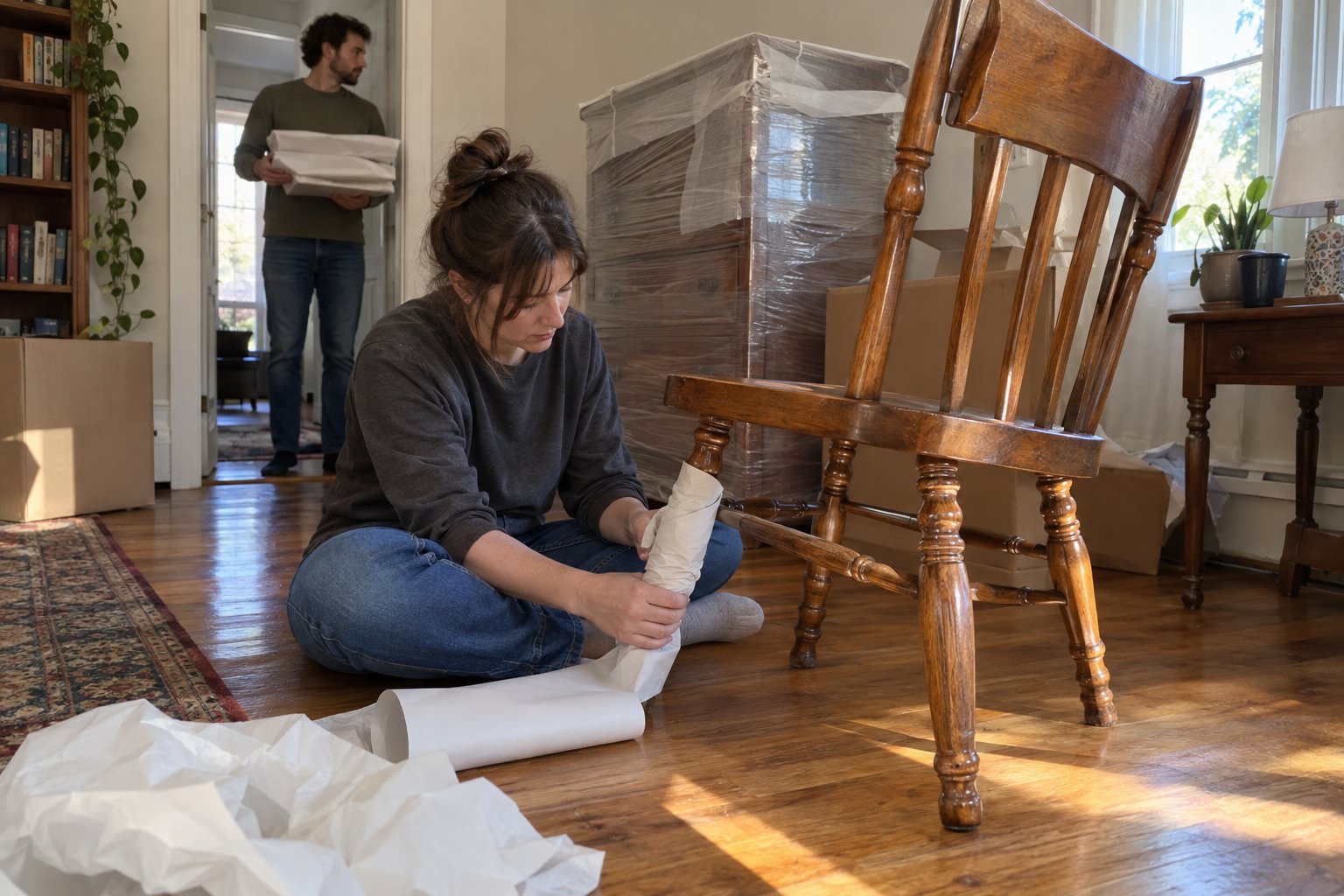
Why do people move? The reasons usually fall into a handful of categories: a new job, a change in household size, a desire for a different home or neighborhood, or a life event like a marriage, divorce, or retirement. Each reason changes how much you need to think through before moving day, and each one also changes whether doing it yourself or hiring help makes more sense. This guide walks through the most common reasons people move and compares the two approaches on time, effort, risk, and fit.
Moving for a Job vs. Moving for Lifestyle: Does the Reason Change the Approach?
Yes, the reason behind a move often dictates the timeline, and the timeline is what really decides whether DIY or hiring movers fits better. A job relocation usually comes with a hard start date and little flexibility, while a lifestyle move (wanting more space, a quieter area, or a shorter commute) often has a softer deadline.
When a move is tied to employment, the clock is working against you. You may be coordinating a start date, a lease end date, and a packing timeline all at once. Hiring a crew to load and unload removes one major variable from that equation, even if you still handle your own packing. A lifestyle move gives you more room to plan, which is when doing more of the heavy lifting yourself becomes realistic, since you can spread tasks over weeks instead of days.
As a rough rule of thumb, plan on needing about a day to pack and prepare each room properly, whether you are doing it yourself or getting ready for a crew. That single estimate helps you see quickly whether your timeline supports a DIY approach or whether you need help compressing the work.
Downsizing vs. Upsizing: Which One Suits Doing It Yourself?
Downsizing moves tend to suit a DIY approach more often than upsizing moves do, mainly because there is less furniture and fewer heavy items to move in the first place. Upsizing, by contrast, usually means more furniture, more boxes, and often larger or bulkier pieces that are harder to manage without help.
If you are downsizing, perhaps moving from a house into an apartment or consolidating two households into one, you are likely getting rid of furniture rather than adding it. Fewer large items means fewer people needed to carry them, and a smaller space to navigate on the other end. This is often the scenario where a determined person with a few friends and a rented truck can manage the physical move reasonably well.
Upsizing works differently. You are usually keeping everything you already own and adding to it, which means more volume and more weight to move in the same amount of time. Heavy furniture, especially anything that needs to be carried through narrow doorways or up stairs, is where DIY moves tend to run into trouble. This is a case where hiring help for the loading, carrying, and unloading portion of the move, even if you pack your own boxes, reduces the physical risk substantially.
Moving After a Life Event: Who Should Handle This Alone?
Life-event moves, like a marriage, a divorce, a retirement, or the loss of a family member, are suited to hiring help far more often than other types of moves, mainly because of the emotional weight already involved. Adding the physical demands of a move on top of an already difficult or busy period is where people get hurt or burn out.
If you are combining two households after a marriage, you are dealing with duplicate furniture, new space planning, and often two sets of opinions about what stays and what goes. That is a lot of decision-making to handle at the same time as lifting and hauling. If you are separating households after a divorce, or managing a move during a period of grief, the practical benefit of hiring a crew is that it frees up mental and emotional bandwidth for everything else that needs attention.
Retirement moves often fall somewhere in between. If you are downsizing into a smaller home as part of retirement, the physical demands may be lighter, but the emotional process of sorting through decades of belongings still takes real time and energy. In any of these situations, the honest answer to "should I do this myself" is usually no, not because you are incapable, but because your energy is better spent elsewhere.
What Does Each Approach Actually Cost You in Time and Effort?
Doing it yourself means you provide the labor, the vehicle, and the schedule, and it takes longer because you are fitting the move around everything else in your life. Hiring movers means you are paying for trained labor and equipment, and the physical work moves faster because a crew is doing the carrying, loading, and unloading as their full focus for the day.
A DIY move usually stretches across multiple days: one or more days to pack, a day to load and transport, and another day or more to unload and settle in, especially if you are relying on friends or family whose schedules need to line up with yours. A professional crew compresses the loading and unloading portion significantly, since carrying furniture and boxes is what they do every day rather than an occasional task.
The trade-off is straightforward. DIY asks more of your time and your body. Hiring help asks you to coordinate with a crew and trust someone else with your belongings. Neither is wrong, but knowing which one your specific move calls for, based on the reason behind it, is what keeps moving day from becoming more stressful than it needs to be.
Our Recommendation for the Most Common Case
For most moves driven by a job change, a growing household, or a life event with a firm deadline, hiring help for the loading, carrying, and unloading is the better fit. It compresses the physical work into a single day, reduces the risk of injury from carrying heavy furniture, and lets you focus your own time on packing, logistics, and settling in rather than hauling boxes.
DIY still makes sense for smaller, simpler moves, particularly downsizing moves with less furniture and a flexible timeline. If that describes your situation, a rented truck and a few extra hands may be all you need. If your move involves heavier furniture, a tighter deadline, or an emotionally demanding life event, hiring a crew for even part of the job, like the loading and unloading, is worth the consideration.
Whichever direction you choose, take care of the administrative side early. USPS change of address and mail forwarding is one of the simpler steps to handle well before moving day, so your mail follows you no matter how the physical move goes.
Getting Help With Part of the Move
You don't have to choose all-DIY or all-hired. Many people pack their own boxes and handle smaller items themselves, then bring in help specifically for the heavy furniture, the loading, and the unloading, which is where injuries and damage are most likely. If that split approach fits your move, it's worth looking at what local moving and loading services typically include so you can decide exactly where you want help and where you'd rather handle it yourself.
If you're not sure whether your move falls within a provider's coverage area, checking a service area page before you commit to a plan can save you a scramble closer to your date.
Planning your move? Request a quote from Journeymen Oklahoma.
Frequently Asked Questions
How far in advance should I decide between DIY and hiring movers?
Make the call as soon as you know your move date, ideally several weeks out. That gives you time to pack properly if you're going the DIY route, or to book help for loading and unloading before a crew's schedule fills up.
What should I tell a moving crew before moving day if I'm only hiring them for part of the move?
Let them know exactly which items and rooms they're handling, whether there are stairs or tight hallways, and which pieces of furniture need to be taken apart and reassembled. The more specific you are ahead of time, the smoother the day goes.
Is it harder to move during a life event like a divorce or a death in the family?
It can be, mostly because of the emotional load rather than the physical work itself. Many people find it easier to hand off the heavy lifting and focus their energy on the decisions and paperwork that come with the situation.
How do I know if my move is simple enough to handle myself?
Look at the volume of heavy furniture, the number of stairs or doorways involved, and how much time you realistically have. A smaller, downsizing move with a flexible timeline is usually the easiest to handle without help.
Should I update my address before or after the move?
It's worth starting the process before moving day. USPS change of address and mail forwarding can be set up in advance so your mail starts redirecting close to your move date instead of after you've already settled in.
Related Blogs

What Our Customers Say
Read genuine feedback from our satisfied customers to understand why we are the trusted choice for moving services.
Proudly Serving These Areas

Moving Oklahoma City Families and Military Members With Care
From local Oklahoma City moves to long-distance relocations, Journeymen Moving helps families and military members move with confidence. From the first box to the final unload, our team is here to make your move easier every step of the way.