
Moving Tips & Insights

Do You Need to Empty Dressers Before a Move?
Do you need to empty dressers before a move? It depends on the dresser's construction, what's inside, and how far it's traveling. Here's how to decide piece by piece.
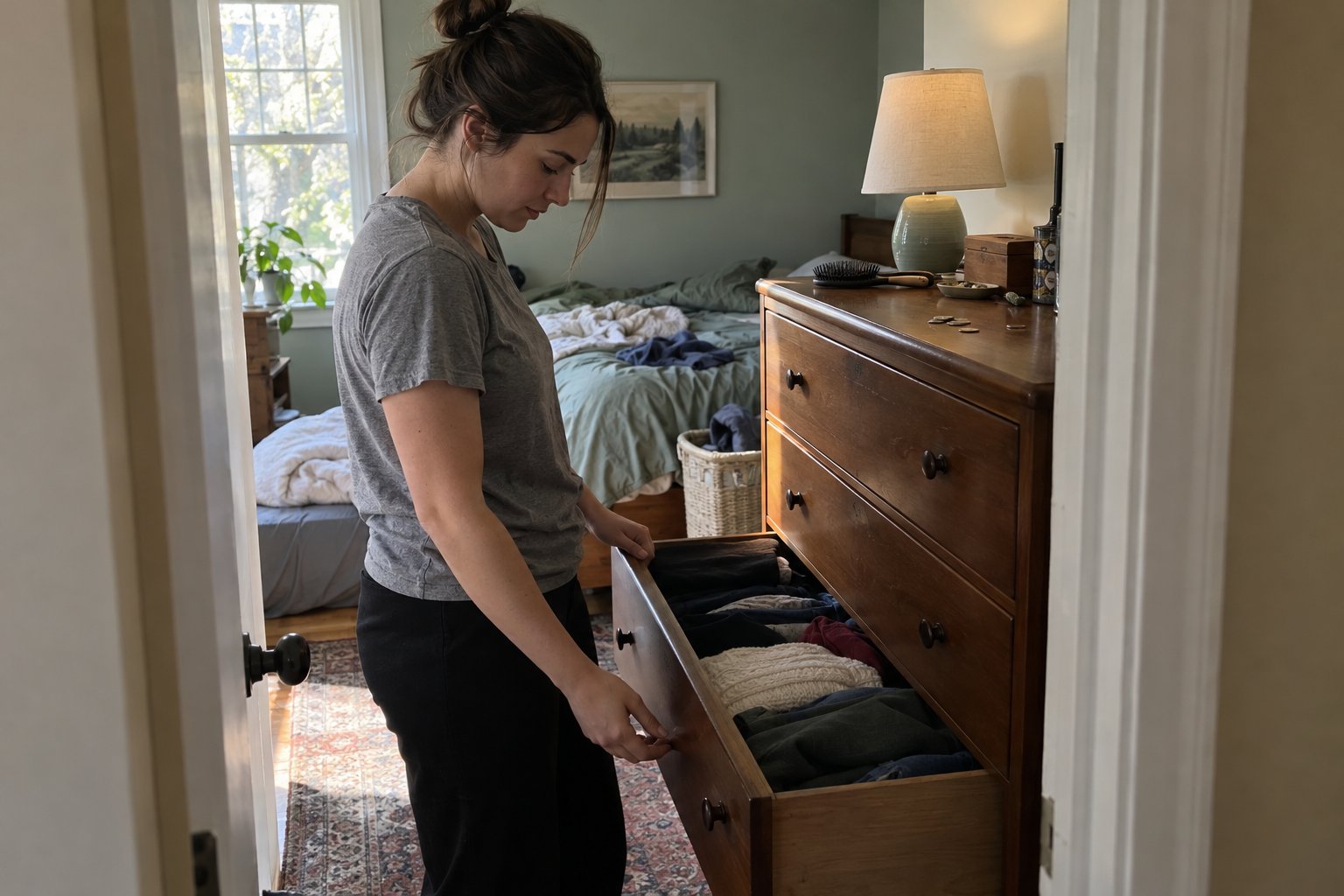
No, you don't always need to empty dressers before a move, but it depends on the dresser, what's inside it, and how far it's traveling. Lightweight items like folded clothes or linens can often stay in place, while anything heavy, breakable, or liquid needs to come out first. The right answer changes piece by piece, not room by room.
What Changes the Answer: Dresser Construction
The biggest factor isn't what's inside the dresser, it's what the dresser itself is made of. Solid wood pieces with dovetail joints and metal drawer slides can usually handle some added weight without strain. Pieces built from particleboard, veneer, or held together with staples and glue are a different story: drawer bottoms can bow or pop out of their tracks under extra weight, especially once the piece gets tilted or carried on its side.
If you're not sure which category your dresser falls into, pull a drawer most of the way out and press down gently on the bottom panel. If it flexes noticeably, treat it as a piece that needs to travel empty.
Does It Matter What's Inside the Drawers?
Yes, contents matter as much as construction. Soft, lightweight items like folded shirts, towels, or sheets add very little stress to a drawer and rarely shift enough to cause damage. Heavier items like books, tools, or stacked jeans add real weight, and anything with glass, liquid, or sharp edges, think picture frames, lotion bottles, or jewelry with clasps, can break, leak, or scratch the inside of the drawer during transit.
A simple way to sort it: if you'd be comfortable carrying that drawer by itself with both hands without anything sliding or spilling, it can probably stay in the dresser. If it would need to be braced or carried flat, pack it separately instead.
Common Misconception: "Full Drawers Save Packing Time"
A lot of people leave drawers full thinking it skips a packing step entirely, but that's not quite how it plays out. Furniture with full drawers is heavier and more awkward to carry, which slows down the loading process and increases the chance of someone straining their back or losing their grip on stairs or around corners. What you save in folding and boxing, you often spend back in slower, more careful carrying. The real time savings come from leaving in only what's light and secure, not from leaving everything in.
How Far Is the Dresser Traveling?
Distance and handling change the calculation too. A dresser moving a short distance, carried upright the whole way, tolerates more weight than one riding in a truck for hours, where it may get tilted, stacked against, or jostled on the road. The longer and rougher the ride, the more conservative you should be about what stays inside.
As a rule of thumb, plan to leave no more than a light layer or two of soft items in any drawer that's staying loaded, and empty anything below that. It's an approximation, not a hard limit, but it keeps most standard dressers within a safe range.
What Should You Tell a Moving Crew About Full Drawers?
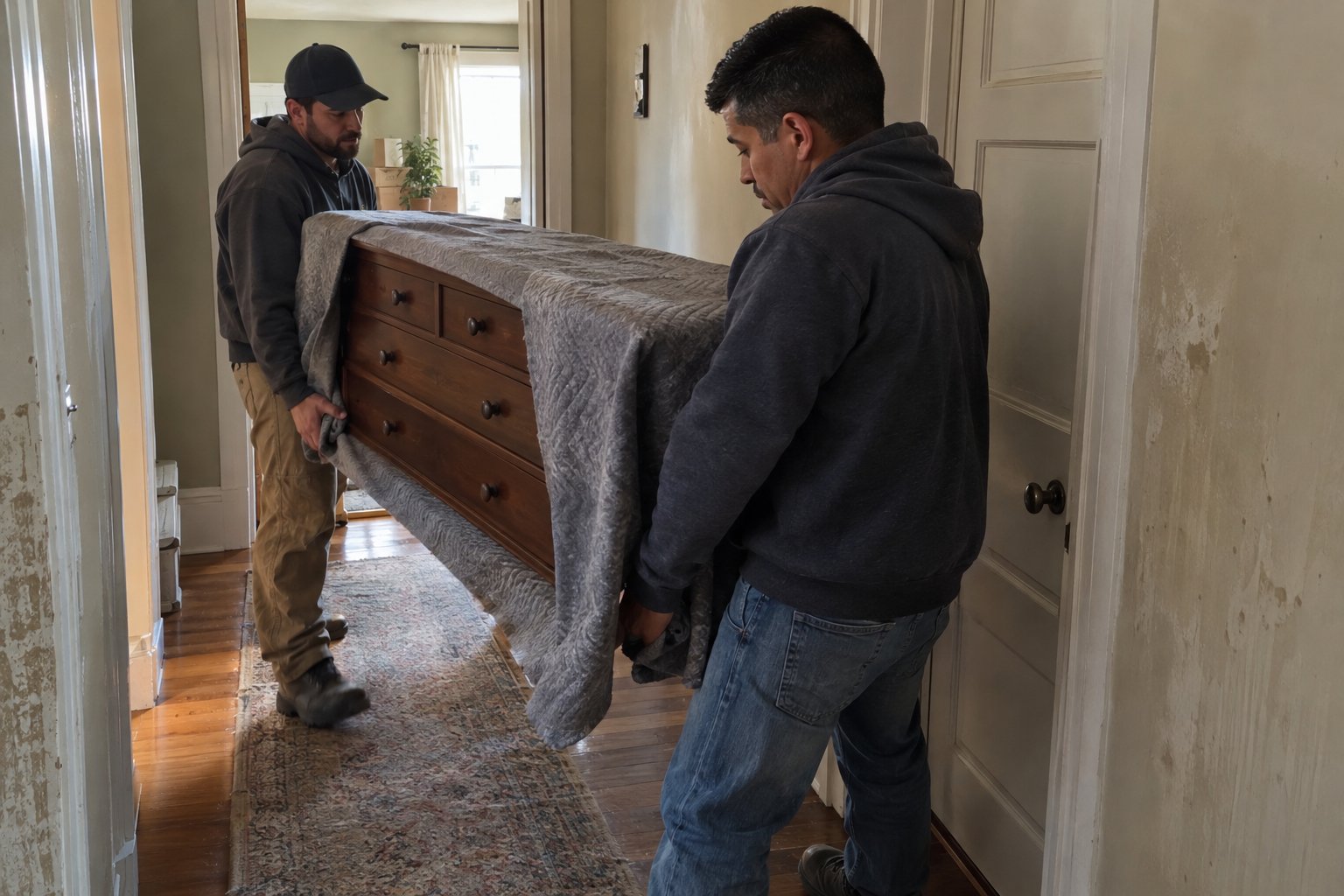
Tell the crew before they start loading which pieces still have items inside and roughly how heavy those drawers are. This lets them decide how to carry the piece, including how many people and which angle, and whether to tape drawers shut so they don't slide open mid-carry. Lifting a heavier, unbalanced piece the wrong way is a common source of strain, which is part of why OSHA's guidance on ergonomics and safe lifting recommends keeping loads close to the body and letting the legs do the work rather than the back.
Crews who regularly handle furniture moving and protection on moving day can usually accommodate some full drawers, but they need that information up front rather than discovering it halfway out the door. If you're relying on a crew for the heavier carrying, it's worth deciding ahead of time which pieces you'll empty yourself.
For a fuller walk-through of getting furniture move-ready beyond just drawers, our guide on taking apart furniture before a move covers when disassembly makes more sense than carrying a piece whole, which matters for dressers too heavy or awkward to carry loaded.
When Should You Always Empty a Dresser?
Empty the dresser whenever it needs to go up or down stairs, through a tight doorway, or get laid on its back or side to fit through a space. Tilting a loaded dresser shifts weight unevenly and puts the most stress on drawer bottoms and slides, which is exactly when cheap hardware tends to fail. The same goes for any dresser that's already showing signs of wear, like drawers that stick or wobble on their tracks.
If your move involves a portable container or a longer drive, it also makes sense to fully empty drawers rather than leaving even light items inside, since those pieces sit loaded for longer and get moved more than once. If you're still weighing whether to handle the carrying yourself or bring in help for the heaviest pieces, our comparison of moving yourself versus hiring loading help walks through how that decision changes the effort and risk on either side.
Whatever you decide, confirm your crew's availability and any scheduling details through a written quote request ahead of moving day, so there are no surprises about what the team can and can't carry loaded.
Does It Matter Which Room the Dresser Is In?
Not really. The construction, contents, and distance traveled matter far more than whether the dresser sits in a bedroom, hallway, or guest room. A sturdy bedroom dresser with folded linens inside behaves the same as a sturdy hallway dresser with folded towels inside. Treat each piece on its own merits rather than assuming every dresser in a given room needs the same approach.
Planning your move? Request a quote from Journeymen Oklahoma.
Frequently Asked Questions
Can I leave clothes in dresser drawers when moving?
In most cases, yes, as long as the dresser is solidly built and the clothes are light and folded, not stacked high. If the dresser needs to be tilted, carried up or down stairs, or has particleboard construction, it's safer to remove the clothes first.
Will leaving items in a dresser damage it during a move?
It can, especially with lower-quality furniture. Added weight combined with tilting or jostling is what typically causes drawer bottoms to bow or slides to pull loose, so the risk goes up with distance and handling, not just weight alone.
Should I tape dresser drawers shut before movers arrive?
Taping drawers shut is a good idea if you're leaving any items inside, since it keeps them from sliding open while the piece is being carried. Use a tape that won't damage the finish, and remove it once the piece is in place.
How do I know if my dresser is too fragile to move with full drawers?
Press gently on the bottom of a mostly open drawer. If it flexes or feels thin, or if the drawers already stick or wobble, treat the piece as one that should travel empty regardless of what's inside.
What should I pack separately instead of leaving in a dresser?
Anything heavy, breakable, or liquid, like books, framed items, jewelry boxes, or toiletries, should be packed in its own labeled box rather than left in a drawer, even if the dresser itself is sturdy.
Related Blogs

What Our Customers Say
Read genuine feedback from our satisfied customers to understand why we are the trusted choice for moving services.
Proudly Serving These Areas

Moving Oklahoma City Families and Military Members With Care
From local Oklahoma City moves to long-distance relocations, Journeymen Moving helps families and military members move with confidence. From the first box to the final unload, our team is here to make your move easier every step of the way.