
Moving Tips & Insights

How to Take Apart Furniture Before a Move
A step-by-step guide to taking apart furniture before a move, covering the tools you need, the order to work in, and how to keep screws and bolts organized so reassembly is simple.
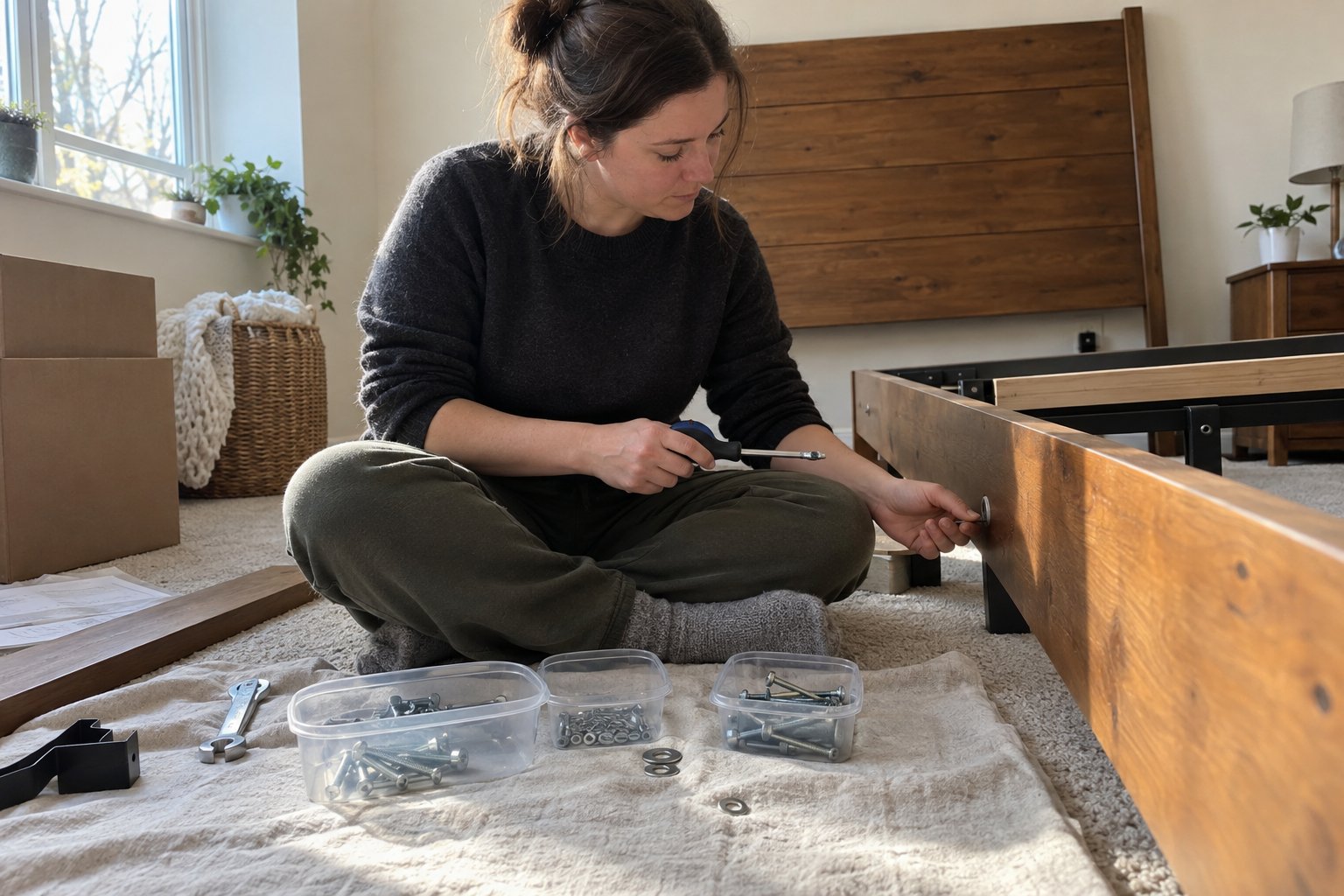
Taking apart furniture before a move keeps large pieces from getting stuck in doorways, protects them from scratches and cracks, and makes loading a truck far more manageable. The trick is doing it in an order that keeps every screw, bolt, and bracket matched to the piece it came from, so reassembly on the other end doesn't turn into a guessing game. Here's how to take apart furniture before a move without losing hardware or damaging the piece, plus how to decide which pieces even need it.
What Do You Need Before You Start Taking Apart Furniture?
Before you touch a single screw, gather a basic tool kit, some way to store small hardware, and an extra set of hands for anything heavy. Having everything ready before you start keeps you from stopping mid-disassembly to go hunt for a screwdriver with one leg of a table hanging loose.
At minimum, you'll want a set of screwdrivers (flathead and Phillips), an adjustable wrench, an Allen key set since a lot of flat-pack furniture uses hex bolts, small resealable bags or a labeled box for hardware, a permanent marker or masking tape for labeling, and furniture pads or old blankets to protect pieces once they're apart. If a piece is heavier than one person can safely lift, line up help before you start rather than mid-task, since a half-disassembled dresser is an awkward thing to hold up alone. Reviewing basic lifting form, like the kind OSHA outlines for safe lifting, is worth doing before you're wrestling with a frame on its side.
Steps to Take Apart Furniture Before a Move
Work through disassembly in this order so you're never left supporting a piece with no safe way to set it down:
- Empty the piece completely. Remove drawers, shelves, cushions, and any contents from dressers, cabinets, or bookshelves before you loosen anything. A loaded piece is both heavier and more likely to tip as you remove its frame screws.
- Photograph the assembled piece from a few angles. This takes thirty seconds and saves real time later when you're trying to remember which bracket faced which direction.
- Remove any attachments first. Headboards, footboards, mirrors attached to dressers, and glass tabletops should come off before you work on the main frame.
- Loosen hardware before fully removing it on pieces with multiple connection points, like bed frames or table legs. Loosening all the bolts first, then removing them, keeps uneven pressure from warping a frame as the last connection gives way.
- Bag and label hardware by component as you remove it, not at the end. Tape each bag to the matching piece, or to the underside of a tabletop, so nothing ends up in a box labeled "misc."
- Set each component down on a protected surface immediately after removing it, rather than leaning pieces against walls or each other.
- Wrap exposed edges and finished surfaces with furniture pads or blankets once a piece is fully apart, especially for anything with a wood veneer or glass element.
How Do You Keep Screws and Bolts From Getting Lost?
The most reliable method is to label hardware the moment it comes off the piece, not after you've finished disassembling everything in the room. Use small resealable bags, write the piece's name and which part the hardware belongs to on the bag, and tape it directly to the corresponding component.
For a bed frame with several different bolt sizes, separate hardware by connection point (headboard bolts in one bag, side rail bolts in another) rather than combining everything into a single bag. If a piece came with an instruction sheet when it was originally assembled, pack that sheet with the hardware bag. It will save guesswork later even if you remember the general process. If you still have a few pieces apart when a moving crew arrives, let them know which hardware bags go with which pieces so they can load and carry those sections without mixing anything up; our moving services cover the loading, carrying, and furniture protection once a piece is ready to go.
Taking Apart a Bed Frame for Moving
Bed frames are one of the most common pieces people disassemble, and also one of the easiest to get wrong because of how many bolts look alike. Remove the mattress and box spring first, then work rail by rail: loosen the bolts connecting each side rail to the headboard and footboard, then remove them fully once the frame is stable enough to separate without the headboard tipping. Keep headboard and footboard hardware in separate labeled bags, since the bolt lengths often differ even when they look similar.
What's the Most Common Mistake When Disassembling Furniture?
The most common mistake is removing all the hardware before deciding where it's going to live, which usually means a pile of loose screws at the end of the day with no clear idea which piece each one belongs to. Hardware that gets swept into a single junk drawer or a generic box corner is the number one reason reassembly takes far longer than the disassembly did.
A second common mistake is skipping the "before" photo, especially on pieces with directional brackets or asymmetrical hardware. It only takes a few seconds, but it turns a frustrating reassembly puzzle into a quick reference check. A third is disassembling pieces that never needed it in the first place. If you're not sure which furniture actually has to come apart, it's worth measuring your doorways and hallway turns before you start pulling out screwdrivers, especially if you're moving into a different type of home than the one you're leaving.
How Much Time Should You Set Aside for Disassembly?
As a rough rule of thumb, allow about 15 to 20 minutes per standard furniture piece, such as a bed frame or a dining table, and longer for anything with unusual hardware or an awkward shape. A full bedroom set with a bed, dresser, and nightstands might take close to an hour once you include labeling and wrapping.
Budgeting this time into your moving day schedule, rather than assuming it will happen quickly between other tasks, keeps disassembly from becoming the thing that holds up the rest of the load. If you're working with a crew that's also handling your loading and unloading, let them know ahead of time which pieces still need to come apart so they can plan the order of work around it.
Planning Disassembly Around Your Move Date
Disassembly fits best into the final stretch of your packing timeline, close enough to moving day that pieces don't sit apart for weeks but early enough that you're not rushing through labeling. If you're booking professional help for the move itself, check our service area to confirm coverage, and get a sense of what's included by reviewing our list of moving services before deciding how much disassembly to handle yourself versus leave to the crew.
Planning your move? Request a quote from Journeymen Oklahoma.
Frequently Asked Questions
Should I take apart furniture myself or leave it for moving day?
If you have the tools and a bit of time, disassembling simpler pieces like bed frames or small tables yourself ahead of time can speed up loading. Larger or more complex pieces are often easier to leave until moving day, especially when a crew is handling the loading.
What should I tell a moving crew about furniture that still needs to be taken apart?
Let them know which pieces need disassembly, roughly how many, and where the hardware bags are stored so they can plan the order of loading. Mentioning anything unusual, like a bed frame with mismatched bolts, helps them budget time accurately.
Do I need to take apart furniture that fits through doorways assembled?
Not necessarily. If a piece clears every doorway and stairwell along the path to the truck, it often doesn't need disassembly at all. Measure tight spots ahead of time to decide which pieces actually require it.
How do I remember how a piece goes back together?
Take photos from multiple angles before you start, keep hardware labeled by component, and pack any original assembly instructions with the matching bag of hardware. These three habits cover most of what people forget.
What furniture is hardest to take apart without help?
Pieces with hidden cam locks, like some flat-pack wardrobes and bed frames, can be tricky without the right tool, and anything heavy enough to need two people for safe lifting should never be tackled alone. When in doubt, check for a label or sticker indicating the assembly hardware type before starting.
Related Blogs


What Our Customers Say
Read genuine feedback from our satisfied customers to understand why we are the trusted choice for moving services.
Proudly Serving These Areas

Moving Oklahoma City Families and Military Members With Care
From local Oklahoma City moves to long-distance relocations, Journeymen Moving helps families and military members move with confidence. From the first box to the final unload, our team is here to make your move easier every step of the way.